

Hello dear ! As a supplier of Double Ribbon Mixers, I often get asked about the mixing stability of these machines. So, I thought I'd take a moment to dive deep into this topic and share some insights with you.
First step, let's understand what we mean by mixing stability. In a nutshell, it refers to the ability of a mixer to consistently produce a homogeneous mixture over multiple batches. A mixer with high mixing stability ensures that each batch has the same quality, composition, and characteristics. This is crucial, especially in industries where precision and consistency are key, like food processing, pharmaceuticals, and chemicals.
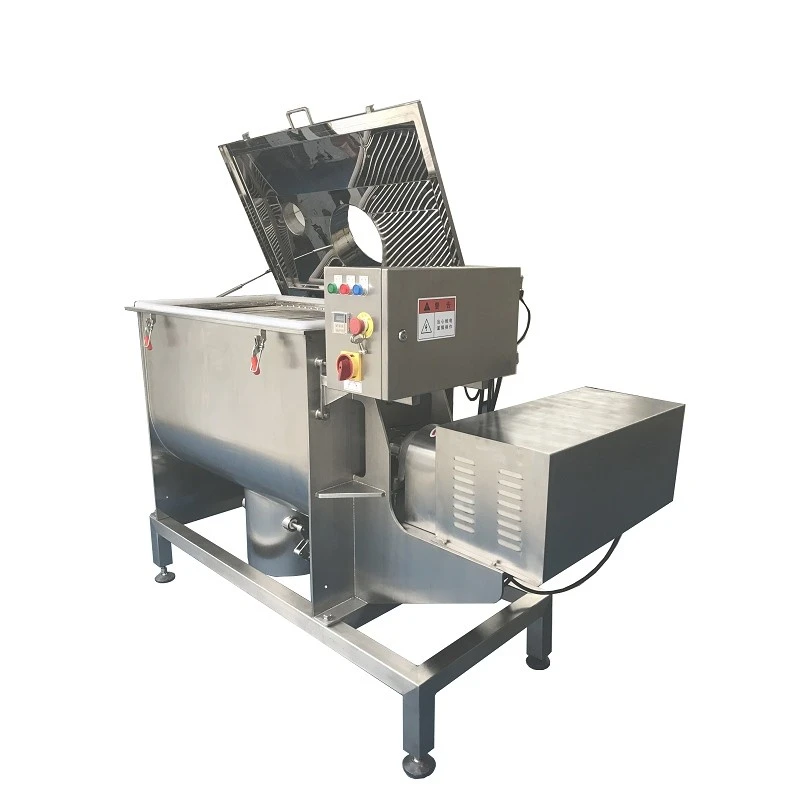
Now, let's talk about the Double Ribbon Mixer itself. The Double Ribbon Mixer is a horizontal mixer that uses two concentric helical ribbons rotating in the same direction but at different speeds. This unique design creates a complex flow pattern within the mixing chamber, which helps to achieve a thorough and uniform mixing of materials.
One of the main factors that contribute to the mixing stability of a Double Ribbon Mixer is its design. The ribbons are carefully engineered to create a three-dimensional flow of materials, which promotes both radial and axial mixing. Radial mixing helps to move the materials from the outer edge of the mixing chamber to the center, while axial mixing ensures that the materials are evenly distributed along the length of the mixer. This combination of radial and axial mixing helps to reduce the mixing time and improve the overall mixing quality.
Another important factor is the construction of the mixer. Our Stainless Steel Ribbon Mixer is made from high-quality stainless steel, which not only provides excellent corrosion resistance but also ensures a smooth and clean mixing surface. This is important because any buildup of materials on the mixer walls can affect the mixing performance and reduce the mixing stability.
The speed and torque of the mixer are also critical factors. The Double Ribbon Mixer is designed to operate at a specific speed and torque, which are carefully selected based on the properties of the materials being mixed. If the speed is too high, the materials may be subject to excessive shear forces, which can cause them to break down or degrade. On the other hand, if the speed is too low, the mixing may not be efficient enough, and the mixture may not be homogeneous.
In addition to these factors, the loading capacity of the mixer also plays a role in its mixing stability. It's important not to overload the mixer, as this can put additional stress on the ribbons and the drive system, which can lead to premature wear and tear and affect the mixing performance. Always follow the manufacturer's recommended loading capacity to ensure optimal mixing stability.
Let's also consider the maintenance of the Double Ribbon Mixer. Regular maintenance is essential to keep the mixer in good working condition and to ensure its long-term mixing stability. This includes cleaning the mixer after each use, checking the ribbons for wear and tear, and lubricating the drive system as needed. By following a proper maintenance schedule, you can extend the lifespan of the mixer and ensure that it continues to perform at its best.
The type of materials being mixed also has an impact on the mixing stability. Different materials have different physical and chemical properties, such as particle size, density, and viscosity. These properties can affect the flow behavior of the materials within the mixer and, therefore, the mixing performance. For example, materials with a high viscosity may require a longer mixing time or a higher mixing speed to achieve a homogeneous mixture. Our Horizontal Ribbon Mixer is designed to handle a wide range of materials, but it's always a good idea to test the mixer with a small batch of your specific materials before starting large-scale production.
It's worth noting that the mixing stability of a Double Ribbon Mixer can also be affected by external factors such as the ambient temperature and humidity. Extreme temperatures or high humidity levels can cause the materials to clump together or become sticky, which can make it more difficult to achieve a uniform mix. If you're operating in a challenging environment, you may need to take additional steps to control the temperature and humidity, such as using a climate-controlled mixing area.
In conclusion, the mixing stability of a Double Ribbon Mixer is influenced by a variety of factors, including its design, construction, speed, torque, loading capacity, maintenance, the type of materials being mixed, and external conditions. By understanding these factors and taking the necessary steps to optimize the operation of the mixer, you can ensure that it consistently produces high-quality, homogeneous mixtures.

If you're in the market for a Double Ribbon Mixer and want to learn more about how our products can meet your specific needs, I'd love to hear from you. Feel free to reach out and start a conversation with us. We're here to help you find the perfect mixing solution for your business.
References
- General knowledge in mixing equipment technology and industry standards.


